This PE firm broke its own rule to deploy AI across 15 portfolio companies

By
Alexandre Kantjas
・
・
7
Min
Read
This PE firm broke its own rule to deploy AI across 15 portfolio companies
By
Alexandre Kantjas
7
Min
Read
RM Equity Partners has a clear philosophy: no centralized cross-portfolio initiatives. They've built their success on letting each company operate independently, avoiding the overhead and complexity of central systems.
But for AI, they made an exception.
They deployed a 3-month AI enablement program across 15 portfolio companies—asking participants to dedicate 5-6 hours per week during their busiest season. The result? One hackathon with 30+ use cases built, €40,000 in annual savings from a single automation, and a fundamental shift in how their teams think about technology.
What convinced them to break their own rules? We talked with Eugen B. Russ, Managing Partner at RMEP.
AI Is Bigger Than You Think
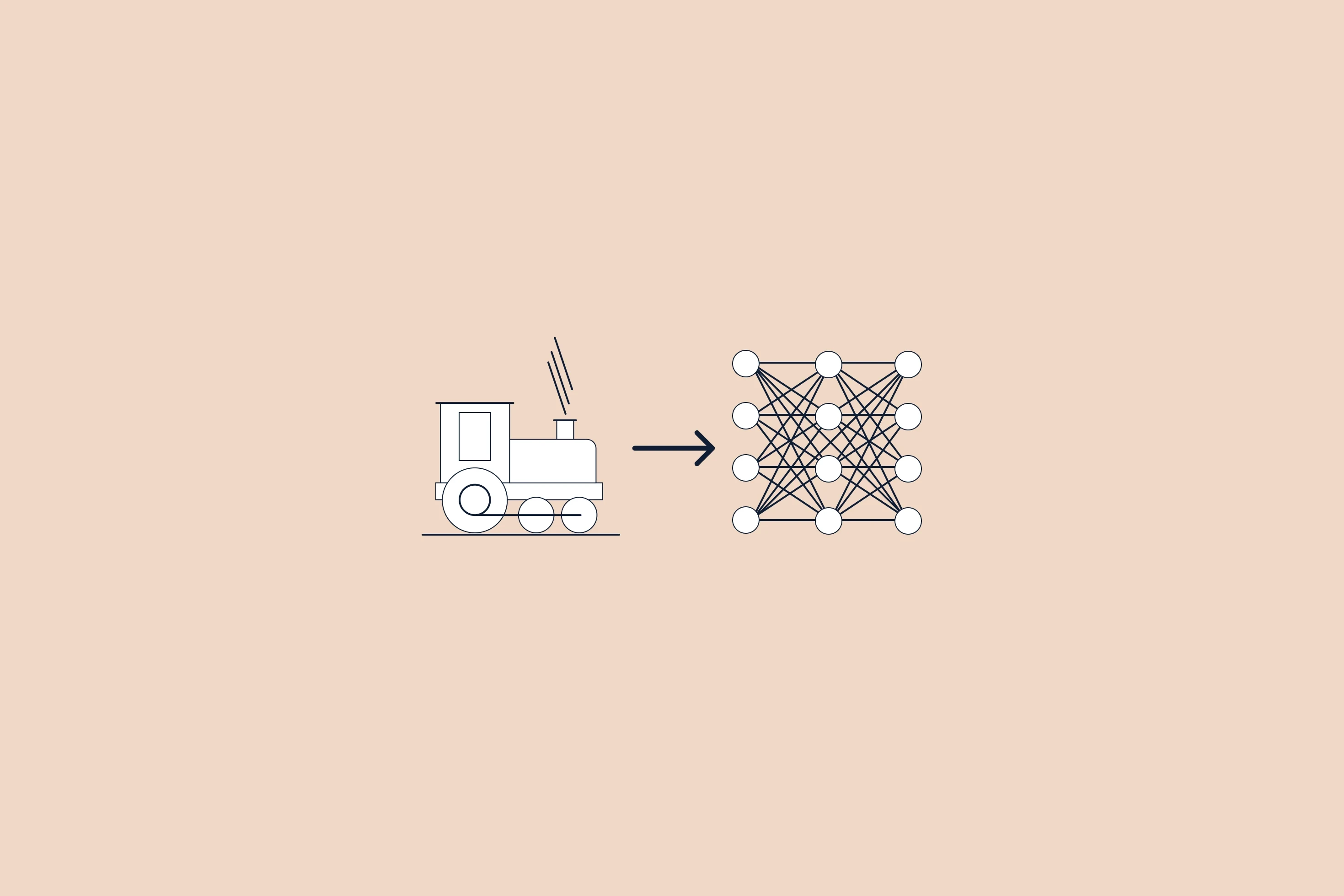
"AI is to knowledge workers what the steam engine was to manufacturing."
This isn't marketing speak. It's the thesis driving RMEP's AI strategy - and it's why they're treating this technological shift differently from every other trend they've seen.
Most funds are still debating whether AI matters. RMEP has moved past that question. Eugen believes that a fundamental transformation is coming, bigger than the internet or mobile phones. Not an incremental improvement to existing processes, but a complete redesign of how knowledge work gets done.
The Agentic Future
Eugen’s vision is specific: within 5-10 years, companies will operate with networks of AI agents supervised by small teams of topic experts. Wide areas of knowledge work - currently handled by large teams - will be managed by these agent networks.
Think about what this means for a typical business function. Customer support with 10 people becomes customer support with 2 experts supervising AI agents. Finance teams shrink while handling more volume. Sales development representatives get replaced by AI that handles pre-qualification, freeing senior people to focus on high-value demos.
The agentic web itself could emerge in 2-3 years. Instead of users navigating websites with filters and search bars, agents could negotiate transactions directly with other agents. The customer journey as we know it - going to Airbnb, applying filters, entering credit card details - might just go away.
The Competitive Clock Is Ticking
Here's the paradox: Despite AI's massive potential, adoption is surprisingly slow.
Eugen looks at some of their portfolio companies and sees existential risk. Some operate web portals that depend on Google discovery. If the web transforms into an agentic marketplace where AI agents negotiate directly with providers, these business models face disruption.
But the slow adoption rate creates an opportunity. Incumbents who implement AI effectively get a 3-5 year competitive advantage. In RMEP’s indutry, three years is an eternity.
The Catch-Up Cost
Delay isn't neutral - it's expensive.
Technology stacks on technology. For instance, you can't implement AI use cases without clean data. But cleaning data takes time. Even for experienced operators, it takes a year to 18 months to get a whole data infrastructure in shape.
If you wait to see "huge results and huge productivity boosts" before acting, you'll need 2-3 years just to catch up on foundational work everyone else has already done.
That's what Eugen means when he talks about the competitive clock. The window is open now. It won't stay open forever.
Why Funds Must Lead This Transition
Portfolio companies focus on day-to-day operations and hitting quarterly targets - as they should.
But this operational focus can make it hard to invest early in longer-term technological shifts. Funds can take the macro view, spot emerging trends, and push portfolio companies to stay ahead.
That's where majority investors can add value - driving initiatives that matter for the future while teams handle shorter-term priorities.
Why You Need to Experience AI Firsthand
You can't understand AI by reading about it. You need to use it.
People try AI once, get a bad result, and conclude "it's not really working." But the issue isn't the technology - it's not understanding how it works or what its limitations are.
It's like learning to use an iPhone without ever seeing the phones that came before it. You can use it, sure. But if you know the predecessors - the Blackberries, the early smartphones, the feature phones - you understand why the iPhone works the way it does. You know what problems it solved and what constraints it operates under.
That deeper understanding is what the AI-First program provides. Not just "how to prompt ChatGPT" but "what is actually possible with this technology, and where does it break down?"
Two Different Value Creation Streams
Eugen thinks about AI value creation at two distinct levels within his company.
Portfolio Level: Operational Efficiency
At the portfolio companies level, the focus is cost reduction and efficiency gains.
Even within RMEP's own investment team, these tactical wins can add up quickly. Example: One person in the accounting department was spending 60% of their time writing replacement invoices for lost travel receipts. Investment professionals would lose coffee receipts, taxi receipts - small amounts, €4-5 each, but hundreds of them. Writing and approving each replacement invoice could take up to 30 minutes.
Someone had an idea: Export the credit card statement as a CSV, run it through an LLM, and generate replacement invoices from the transaction descriptions alone. The process went from 30 minutes per invoice to minutes. Annual savings: €40,000.
Another example: Automated meeting follow-ups. Six to seven calls daily, each requiring a 5-minute follow-up email. An automation now saves email drafts directly in Outlook - complete with participant emails, subject lines, and personalized structure and writing style. Time per meeting: 15 seconds instead of 5 minutes. Weekly savings: nearly 3 hours.
Small automations. But they add up quickly even within RMEP's 12-person investment team. Imagine the impact when you scale these across the entire portfolio.
Fund Level: Better Investment Decisions
At the fund level, the strategy is completely different.
RMEP does 1-2 major deals per year. They currently evaluate a couple thousand companies annually and dismiss 95% immediately because they're not in their sweet spot.
But what if they could expand that funnel from thousands to tens of thousands of companies?
With AI, they can. And if they see 10 times more companies, they can choose from 10 times more options. Their limiting factor is capital, not deal flow. More options means more informed investment decisions and better returns for shareholders.
This isn't about saving money on operations. It's about fundamentally expanding what's possible at the fund level.
The Team Structure
Both strategies share a common philosophy: small teams of A-players, assisted by AI.
Eugen is not looking to grow headcount of the RMEP team: he’s looking to make existing teams more capable. Eight investment professionals might grow to twelve. But not to twenty or thirty.
The dream scenario: topic experts supervising AI agents, not managing large human teams.
What Actually Worked
When RMEP launched the program, Eugen had reasonable concerns.
Would portfolio companies actually engage? They were asking for 5-6 hours per week over 3 months. During Q4. The busiest season. Many participants worked weekends to make time.
The dropout rate should have been significant.
Instead, engagement stayed strong throughout the program.
What Kept Engagement High
Three factors drove the high completion rate:
Strong program organization - Clear structure, consistent coordination, and well-designed curriculum
Personal touch - Coordinators who knew participants by name and checked in regularly
In-person kick-off & hackathon - Putting faces to names and creating something to look forward to
The kick-off day mattered more than expected. It signaled importance, created personal connections, and gave the program weight beyond just another online course.
The Unexpected Insight
What Eugen learned surprised him.
Going in, he thought the program would turn everyone into automation builders. People would start creating workflows and solving problems with AI on their own.
That's not what happened.
What happened was more valuable: People learned what's possible with AI.
They won’t necessarily build every automation themselves. But they now understand capabilities well enough to articulate what they need. They can have intelligent conversations with technical teams. They know when AI is appropriate and when it isn't.
It's like learning Excel. The goal isn't to become a spreadsheet expert who builds every model yourself. The goal is to understand how Excel works well enough to know what's possible, spot mistakes, and "feel" how models behave.
You learn it not to use it, but to understand it.
The New Operating Model
This insight led to a new vision for future team structure: topic experts paired with forward engineers.
Take someone who's worked in customer support for 10 years. They understand every edge case, every customer pain point, every process detail. Pair them with an automation specialist - someone who only does AI implementations, like Palantir's forward deployed engineers.
Together, they automate entire domains.
The expert doesn't need to be a coder. They need to understand what's possible and communicate what they need. The engineer builds it. Both roles are essential.
The Race Car Driver Analogy
Not everyone needs to become a professional automation builder.
But everyone should get behind the wheel once.
Once you've driven a race car, you understand how it works. You know what it can do and what it can't. You can explain to a professional driver what you're trying to achieve. You have a mental model of the possibilities.
That's what the AI-First program provided. Not making everyone a race car driver - but making sure everyone has been behind the wheel.
The alternative is staying in the passenger seat while the competitive landscape transforms around you. And catching up later means 2-3 years of technological debt.
RMEP broke their own rules because they believe AI is that important. Not a nice-to-have. Not a trend to watch. A fundamental shift that demands action now.
The question for other funds isn't whether AI will transform portfolio companies. It's whether you'll lead that transformation or catch up later.
Ready to deploy AI enablement across your portfolio? Learn more about how we help private equity funds drive transformation at scale.
FREE LIVE SESSIONS
What’s the best way to learn AI?
With 9x Live! Join a free session and learn the skills that’ll get you ahead of the 99%.
What to do next
1
Start learning free
Take our AI starter course and apply the latest technologies to your first use case. Completely free. Get started today.
2
Learn it live
Join a free weekly 9x Live session, watch work get automated in real time, and get your questions answered by leading educators. Sign up for the next session.
3
Watch our videos on YouTube
With one of the fastest growing channels in the industry, hundreds of thousands of people watch our tutorials every week. Subscribe here so you never miss a video.

Case studies
RM Equity Partners has a clear philosophy: no centralized cross-portfolio initiatives. They've built their success on letting each company operate independently, avoiding the overhead and complexity of central systems.
But for AI, they made an exception.
They deployed a 3-month AI enablement program across 15 portfolio companies—asking participants to dedicate 5-6 hours per week during their busiest season. The result? One hackathon with 30+ use cases built, €40,000 in annual savings from a single automation, and a fundamental shift in how their teams think about technology.
What convinced them to break their own rules? We talked with Eugen B. Russ, Managing Partner at RMEP.
AI Is Bigger Than You Think
"AI is to knowledge workers what the steam engine was to manufacturing."
This isn't marketing speak. It's the thesis driving RMEP's AI strategy - and it's why they're treating this technological shift differently from every other trend they've seen.
Most funds are still debating whether AI matters. RMEP has moved past that question. Eugen believes that a fundamental transformation is coming, bigger than the internet or mobile phones. Not an incremental improvement to existing processes, but a complete redesign of how knowledge work gets done.
The Agentic Future
Eugen’s vision is specific: within 5-10 years, companies will operate with networks of AI agents supervised by small teams of topic experts. Wide areas of knowledge work - currently handled by large teams - will be managed by these agent networks.
Think about what this means for a typical business function. Customer support with 10 people becomes customer support with 2 experts supervising AI agents. Finance teams shrink while handling more volume. Sales development representatives get replaced by AI that handles pre-qualification, freeing senior people to focus on high-value demos.
The agentic web itself could emerge in 2-3 years. Instead of users navigating websites with filters and search bars, agents could negotiate transactions directly with other agents. The customer journey as we know it - going to Airbnb, applying filters, entering credit card details - might just go away.
The Competitive Clock Is Ticking
Here's the paradox: Despite AI's massive potential, adoption is surprisingly slow.
Eugen looks at some of their portfolio companies and sees existential risk. Some operate web portals that depend on Google discovery. If the web transforms into an agentic marketplace where AI agents negotiate directly with providers, these business models face disruption.
But the slow adoption rate creates an opportunity. Incumbents who implement AI effectively get a 3-5 year competitive advantage. In RMEP’s indutry, three years is an eternity.
The Catch-Up Cost
Delay isn't neutral - it's expensive.
Technology stacks on technology. For instance, you can't implement AI use cases without clean data. But cleaning data takes time. Even for experienced operators, it takes a year to 18 months to get a whole data infrastructure in shape.
If you wait to see "huge results and huge productivity boosts" before acting, you'll need 2-3 years just to catch up on foundational work everyone else has already done.
That's what Eugen means when he talks about the competitive clock. The window is open now. It won't stay open forever.
Why Funds Must Lead This Transition
Portfolio companies focus on day-to-day operations and hitting quarterly targets - as they should.
But this operational focus can make it hard to invest early in longer-term technological shifts. Funds can take the macro view, spot emerging trends, and push portfolio companies to stay ahead.
That's where majority investors can add value - driving initiatives that matter for the future while teams handle shorter-term priorities.
Why You Need to Experience AI Firsthand
You can't understand AI by reading about it. You need to use it.
People try AI once, get a bad result, and conclude "it's not really working." But the issue isn't the technology - it's not understanding how it works or what its limitations are.
It's like learning to use an iPhone without ever seeing the phones that came before it. You can use it, sure. But if you know the predecessors - the Blackberries, the early smartphones, the feature phones - you understand why the iPhone works the way it does. You know what problems it solved and what constraints it operates under.
That deeper understanding is what the AI-First program provides. Not just "how to prompt ChatGPT" but "what is actually possible with this technology, and where does it break down?"
Two Different Value Creation Streams
Eugen thinks about AI value creation at two distinct levels within his company.
Portfolio Level: Operational Efficiency
At the portfolio companies level, the focus is cost reduction and efficiency gains.
Even within RMEP's own investment team, these tactical wins can add up quickly. Example: One person in the accounting department was spending 60% of their time writing replacement invoices for lost travel receipts. Investment professionals would lose coffee receipts, taxi receipts - small amounts, €4-5 each, but hundreds of them. Writing and approving each replacement invoice could take up to 30 minutes.
Someone had an idea: Export the credit card statement as a CSV, run it through an LLM, and generate replacement invoices from the transaction descriptions alone. The process went from 30 minutes per invoice to minutes. Annual savings: €40,000.
Another example: Automated meeting follow-ups. Six to seven calls daily, each requiring a 5-minute follow-up email. An automation now saves email drafts directly in Outlook - complete with participant emails, subject lines, and personalized structure and writing style. Time per meeting: 15 seconds instead of 5 minutes. Weekly savings: nearly 3 hours.
Small automations. But they add up quickly even within RMEP's 12-person investment team. Imagine the impact when you scale these across the entire portfolio.
Fund Level: Better Investment Decisions
At the fund level, the strategy is completely different.
RMEP does 1-2 major deals per year. They currently evaluate a couple thousand companies annually and dismiss 95% immediately because they're not in their sweet spot.
But what if they could expand that funnel from thousands to tens of thousands of companies?
With AI, they can. And if they see 10 times more companies, they can choose from 10 times more options. Their limiting factor is capital, not deal flow. More options means more informed investment decisions and better returns for shareholders.
This isn't about saving money on operations. It's about fundamentally expanding what's possible at the fund level.
The Team Structure
Both strategies share a common philosophy: small teams of A-players, assisted by AI.
Eugen is not looking to grow headcount of the RMEP team: he’s looking to make existing teams more capable. Eight investment professionals might grow to twelve. But not to twenty or thirty.
The dream scenario: topic experts supervising AI agents, not managing large human teams.
What Actually Worked
When RMEP launched the program, Eugen had reasonable concerns.
Would portfolio companies actually engage? They were asking for 5-6 hours per week over 3 months. During Q4. The busiest season. Many participants worked weekends to make time.
The dropout rate should have been significant.
Instead, engagement stayed strong throughout the program.
What Kept Engagement High
Three factors drove the high completion rate:
Strong program organization - Clear structure, consistent coordination, and well-designed curriculum
Personal touch - Coordinators who knew participants by name and checked in regularly
In-person kick-off & hackathon - Putting faces to names and creating something to look forward to
The kick-off day mattered more than expected. It signaled importance, created personal connections, and gave the program weight beyond just another online course.
The Unexpected Insight
What Eugen learned surprised him.
Going in, he thought the program would turn everyone into automation builders. People would start creating workflows and solving problems with AI on their own.
That's not what happened.
What happened was more valuable: People learned what's possible with AI.
They won’t necessarily build every automation themselves. But they now understand capabilities well enough to articulate what they need. They can have intelligent conversations with technical teams. They know when AI is appropriate and when it isn't.
It's like learning Excel. The goal isn't to become a spreadsheet expert who builds every model yourself. The goal is to understand how Excel works well enough to know what's possible, spot mistakes, and "feel" how models behave.
You learn it not to use it, but to understand it.
The New Operating Model
This insight led to a new vision for future team structure: topic experts paired with forward engineers.
Take someone who's worked in customer support for 10 years. They understand every edge case, every customer pain point, every process detail. Pair them with an automation specialist - someone who only does AI implementations, like Palantir's forward deployed engineers.
Together, they automate entire domains.
The expert doesn't need to be a coder. They need to understand what's possible and communicate what they need. The engineer builds it. Both roles are essential.
The Race Car Driver Analogy
Not everyone needs to become a professional automation builder.
But everyone should get behind the wheel once.
Once you've driven a race car, you understand how it works. You know what it can do and what it can't. You can explain to a professional driver what you're trying to achieve. You have a mental model of the possibilities.
That's what the AI-First program provided. Not making everyone a race car driver - but making sure everyone has been behind the wheel.
The alternative is staying in the passenger seat while the competitive landscape transforms around you. And catching up later means 2-3 years of technological debt.
RMEP broke their own rules because they believe AI is that important. Not a nice-to-have. Not a trend to watch. A fundamental shift that demands action now.
The question for other funds isn't whether AI will transform portfolio companies. It's whether you'll lead that transformation or catch up later.
Ready to deploy AI enablement across your portfolio? Learn more about how we help private equity funds drive transformation at scale.
FREE LIVE SESSIONS
What’s the best way to learn AI?
With 9x Live! Join a free session and learn the skills that’ll get you ahead of the 99%.
What to do next
1
Start learning free
Take our AI starter course and apply the latest technologies to your first use case. Completely free. Get started today.
2
Learn it live
Join a free weekly 9x Live session, watch work get automated in real time, and get your questions answered by leading educators. Sign up for the next session.
3
Watch our videos on YouTube
With one of the fastest growing channels in the industry, hundreds of thousands of people watch our tutorials every week. Subscribe here so you never miss a video.
Case studies
read next
Running AI Enablement Internally? Here are Three Things to Consider
AI enablement looks like a training project. It isn't. Skill levels, tools and functions all move at once. Here's what running it internally really takes.

What is Claude Slides, and How to Use Them (Guide for Beginners)
How to use Claude Slides to build an on-brand deck from a one-line brief, edit and export it, and where it beats PowerPoint and Google Slides, and where it doesn't.
read next
Running AI Enablement Internally? Here are Three Things to Consider
AI enablement looks like a training project. It isn't. Skill levels, tools and functions all move at once. Here's what running it internally really takes.
What is Claude Slides, and How to Use Them (Guide for Beginners)
How to use Claude Slides to build an on-brand deck from a one-line brief, edit and export it, and where it beats PowerPoint and Google Slides, and where it doesn't.
Your new home for learning AI.
Weekly live workshops, on-demand courses, and plug-and-play downloadables. Get started for free today.
Your new home for learning AI.
Weekly live workshops, on-demand courses, and plug-and-play downloadables. Get started for free today.
Your new home for learning AI.
Weekly live workshops, on-demand courses, and plug-and-play downloadables. Get started for free today.