How we look at AI Transformation

By
Alexandre Kantjas
・
・
4
Min
Read
How we look at AI Transformation
By
Alexandre Kantjas
4
Min
Read
Every month, companies ask us with advice on AI transformation.
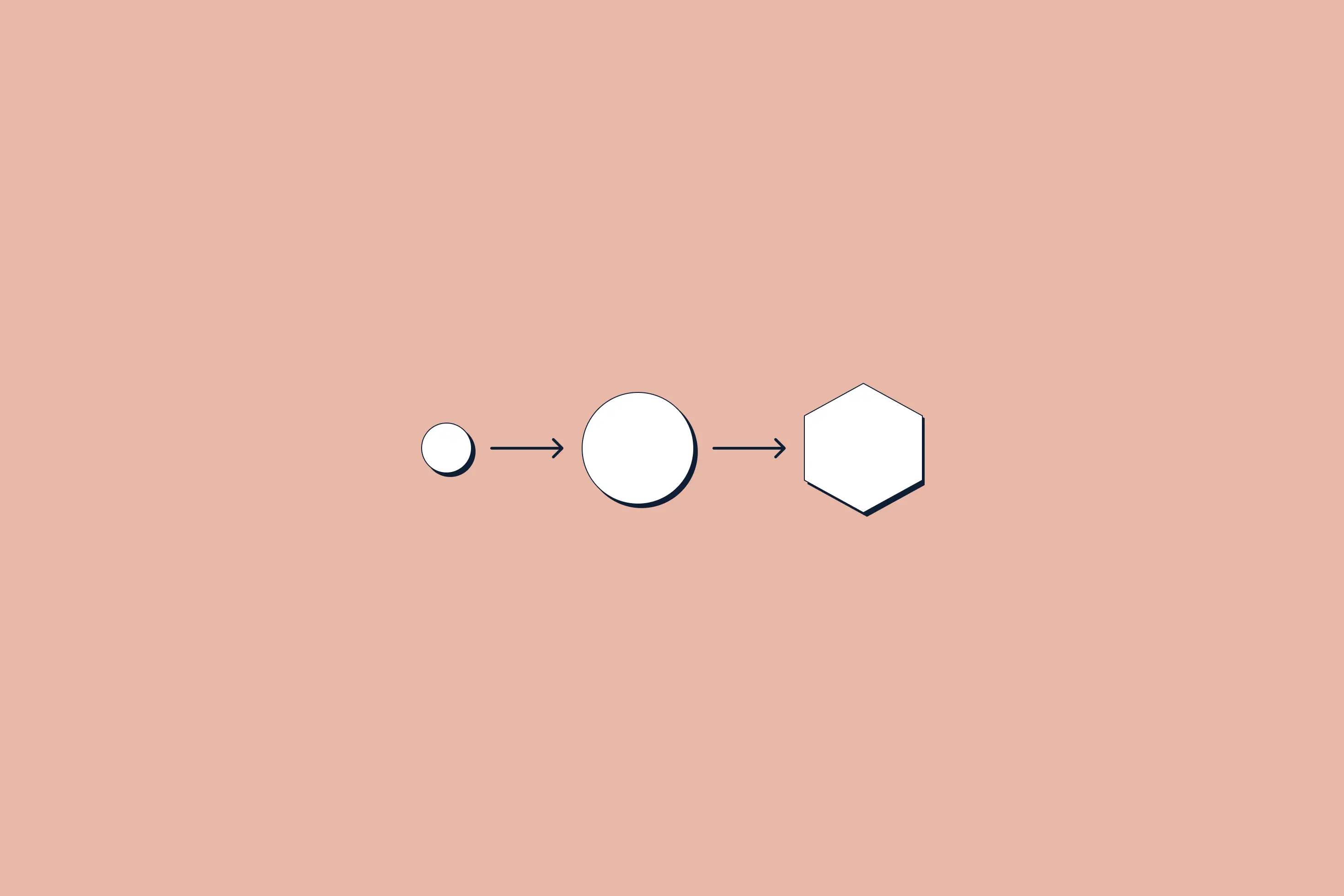
As we began talking to many of them about the topic, we noticed they were standing at different steps in this journey.
Over time, we developed an internal framework to help us visualize and categorize a company's position in their AI journey. This framework helps us understand each organization's maturity level and guided our recommendations. It also helped companies clarify their current stage and identify what to focus on next.
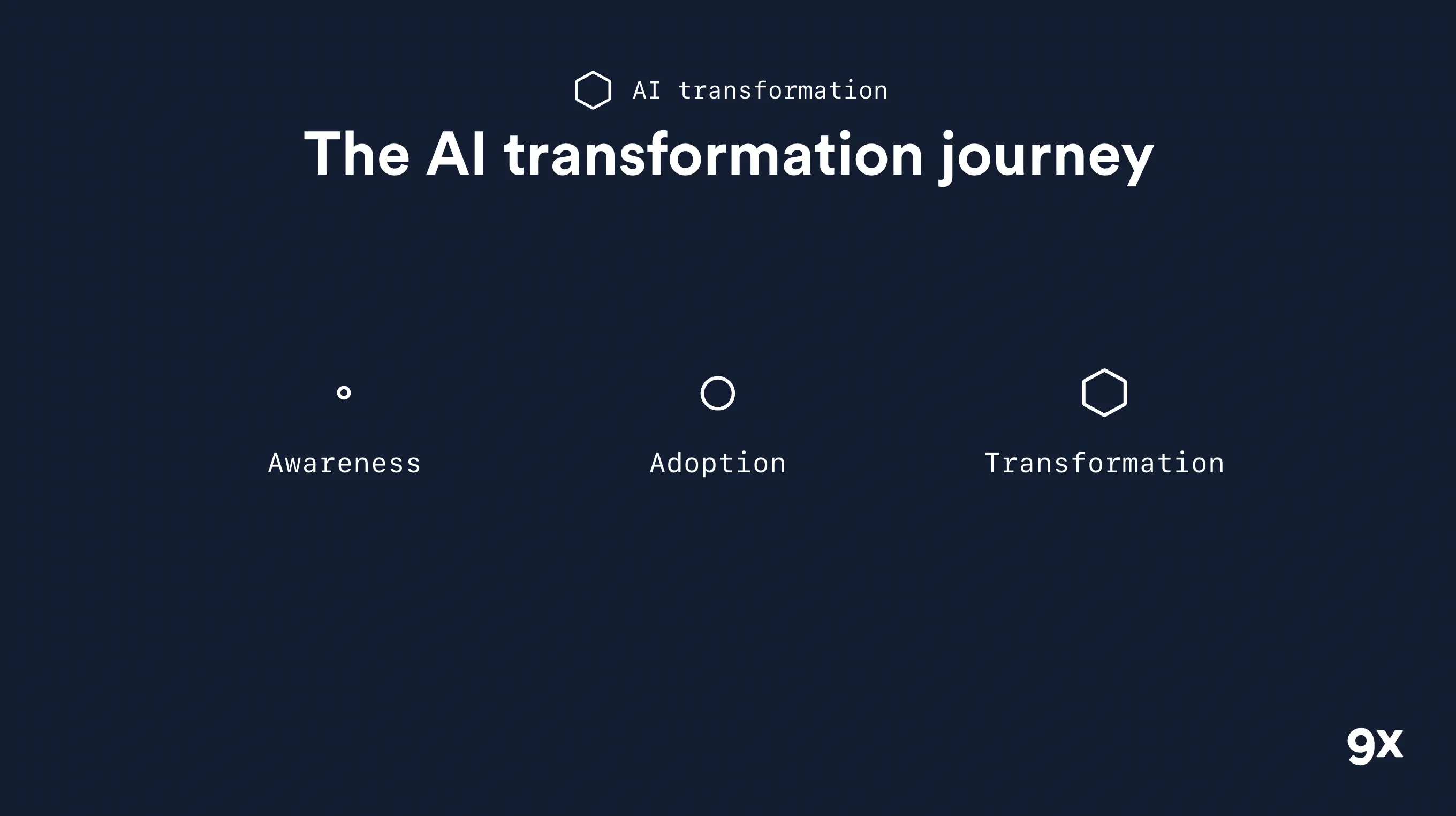
Every organization adopting AI moves through three distinct phases:
Awareness
Adoption
Transformation
Each represents a maturity level in how AI integrates into operations.
Phase 1: Awareness
Let’s start with where most companies reaching out to us are today: awareness.
Companies entering this phase recognize AI's potential and have decided to act on it. They're moving beyond passive observation to active exploration, seeking to understand how AI could create value. This usually starts with management - with often just one C-level executive championing the initiative and getting things moving.
In this phase, leadership starts investigating AI as a potential value driver. Teams show curiosity but lack formal training: a few early adopters experiment independently while most employees observe from the sidelines. Legacy infrastructure remains unchanged and data sits scattered across disconnected systems.
However, two fundamental ingredients are missing: a clear direction and organizational commitment: dedicated resources, budget allocation, and assigned personnel. They prevent companies from moving to a more coordinated adoption phase.
There's a will, but not yet a way.
Signs you are in this phase
There is no clear AI strategy in place, or it still being defined
Leadership discusses AI but doesn't allocate resources
Employees use personal AI accounts rather than company tools
AI experiments happen in isolation without sharing
No designated budget line exists for AI initiatives
The company has no AI training program or learning path
No one tracks which AI tools employees are using
AI success metrics haven't been defined
Employees don't know who to ask about AI questions
Leadership mentions AI in strategy talks but sets no deadlines
Phase 2: Adoption
Companies in this phase move into active implementation.
AI goes from a concept to a practical reality. Organizations commit real resources - budget, personnel, and time - to AI initiatives and begin measuring what works and what doesn't. Behing every AI initiative there is now an owner with clear accountability. Training programs roll out across departments, establishing baseline competency. The topics of infrastructure, tool stack and data are being actively evaluated and addressed. While not fully optimized yet, initial changes are already underway to unlock new potential and enable broader use cases.
Building momentum in this phase is everything: establishing routines, developing competencies, and proving value through measurable results.
But adoption remains uneven: some departments race ahead while others lag; tool sprawl creates friction; cultural resistance persists in pockets; company wide AI fluency is still work in progress.
There's now both a will and a way - but not yet at scale.
Signs you are in this phase
At least one strategic initiative with AI is underway
An AI transformation team works closely with L&D and management
A company-wide AI enablement program exists for AI literacy
The company is building an internal AI automation squad
Procurement evaluates and purchases AI-specific tools
AI chat adoption or usage metrics are being tracked
Success stories of AI use cases are shared in town halls
Leadership allocates specific budget for AI tools and training
Data quality initiatives start to address AI requirements
Some processes get redesigned around AI capabilities
Phase 3: Transformation
Let's be honest: very few companies are at this stage right now.
The best examples are AI-native startups built from scratch with AI at their core. These startups have built their products and operations with AI at the core from day one. They typically operate each business function with significantly lower headcount than traditional industry peers would require for comparable operations - you can find several examples in the Lean AI companies Leaderboard.
For larger, established organizations, reaching true transformation will take time - most are still navigating the earlier phases.
This phase represents true transformation: the organization rebuilds itself around AI as its central nervous system. Technology, processes, culture, and strategy all align around AI-first principles.
The way itself has transformed. AI isn't what the company does - it's what the company is. The playbook here is still being written, and I’ll outline in future articles some examples of companies already doing that.
Signs you are in this phase
The company's strategy leverages AI at the core
Revenue per employee is far higher than industry peers
Proprietary AI systems are developed for competitive advantage
AI proficiency is a default requirement for any job
High levels of process automation across all business functions
Top talent specifically joins because of the AI-native culture
Moving Forward
AI transformation is an ongoing journey.
Knowing where they stand is key for teams wondering what are the next steps to take.
Take a moment to assess your organization: Which phase best describes where you are? What's the one concrete action you could take this week to move forward? Whether that's securing budget approval, launching a pilot program, or redesigning a core process around AI capabilities - progress comes from clarity and commitment.
If you're looking for guidance on your AI transformation journey, we'd love to help.
Book a call with us to discuss where you are today and map out your path forward.
Every month, companies ask us with advice on AI transformation.
As we began talking to many of them about the topic, we noticed they were standing at different steps in this journey.
Over time, we developed an internal framework to help us visualize and categorize a company's position in their AI journey. This framework helps us understand each organization's maturity level and guided our recommendations. It also helped companies clarify their current stage and identify what to focus on next.
Every organization adopting AI moves through three distinct phases:
Awareness
Adoption
Transformation
Each represents a maturity level in how AI integrates into operations.
Phase 1: Awareness
Let’s start with where most companies reaching out to us are today: awareness.
Companies entering this phase recognize AI's potential and have decided to act on it. They're moving beyond passive observation to active exploration, seeking to understand how AI could create value. This usually starts with management - with often just one C-level executive championing the initiative and getting things moving.
In this phase, leadership starts investigating AI as a potential value driver. Teams show curiosity but lack formal training: a few early adopters experiment independently while most employees observe from the sidelines. Legacy infrastructure remains unchanged and data sits scattered across disconnected systems.
However, two fundamental ingredients are missing: a clear direction and organizational commitment: dedicated resources, budget allocation, and assigned personnel. They prevent companies from moving to a more coordinated adoption phase.
There's a will, but not yet a way.
Signs you are in this phase
There is no clear AI strategy in place, or it still being defined
Leadership discusses AI but doesn't allocate resources
Employees use personal AI accounts rather than company tools
AI experiments happen in isolation without sharing
No designated budget line exists for AI initiatives
The company has no AI training program or learning path
No one tracks which AI tools employees are using
AI success metrics haven't been defined
Employees don't know who to ask about AI questions
Leadership mentions AI in strategy talks but sets no deadlines
Phase 2: Adoption
Companies in this phase move into active implementation.
AI goes from a concept to a practical reality. Organizations commit real resources - budget, personnel, and time - to AI initiatives and begin measuring what works and what doesn't. Behing every AI initiative there is now an owner with clear accountability. Training programs roll out across departments, establishing baseline competency. The topics of infrastructure, tool stack and data are being actively evaluated and addressed. While not fully optimized yet, initial changes are already underway to unlock new potential and enable broader use cases.
Building momentum in this phase is everything: establishing routines, developing competencies, and proving value through measurable results.
But adoption remains uneven: some departments race ahead while others lag; tool sprawl creates friction; cultural resistance persists in pockets; company wide AI fluency is still work in progress.
There's now both a will and a way - but not yet at scale.
Signs you are in this phase
At least one strategic initiative with AI is underway
An AI transformation team works closely with L&D and management
A company-wide AI enablement program exists for AI literacy
The company is building an internal AI automation squad
Procurement evaluates and purchases AI-specific tools
AI chat adoption or usage metrics are being tracked
Success stories of AI use cases are shared in town halls
Leadership allocates specific budget for AI tools and training
Data quality initiatives start to address AI requirements
Some processes get redesigned around AI capabilities
Phase 3: Transformation
Let's be honest: very few companies are at this stage right now.
The best examples are AI-native startups built from scratch with AI at their core. These startups have built their products and operations with AI at the core from day one. They typically operate each business function with significantly lower headcount than traditional industry peers would require for comparable operations - you can find several examples in the Lean AI companies Leaderboard.
For larger, established organizations, reaching true transformation will take time - most are still navigating the earlier phases.
This phase represents true transformation: the organization rebuilds itself around AI as its central nervous system. Technology, processes, culture, and strategy all align around AI-first principles.
The way itself has transformed. AI isn't what the company does - it's what the company is. The playbook here is still being written, and I’ll outline in future articles some examples of companies already doing that.
Signs you are in this phase
The company's strategy leverages AI at the core
Revenue per employee is far higher than industry peers
Proprietary AI systems are developed for competitive advantage
AI proficiency is a default requirement for any job
High levels of process automation across all business functions
Top talent specifically joins because of the AI-native culture
Moving Forward
AI transformation is an ongoing journey.
Knowing where they stand is key for teams wondering what are the next steps to take.
Take a moment to assess your organization: Which phase best describes where you are? What's the one concrete action you could take this week to move forward? Whether that's securing budget approval, launching a pilot program, or redesigning a core process around AI capabilities - progress comes from clarity and commitment.
If you're looking for guidance on your AI transformation journey, we'd love to help.
Book a call with us to discuss where you are today and map out your path forward.
read next
Running AI Enablement Internally? Here are Three Things to Consider
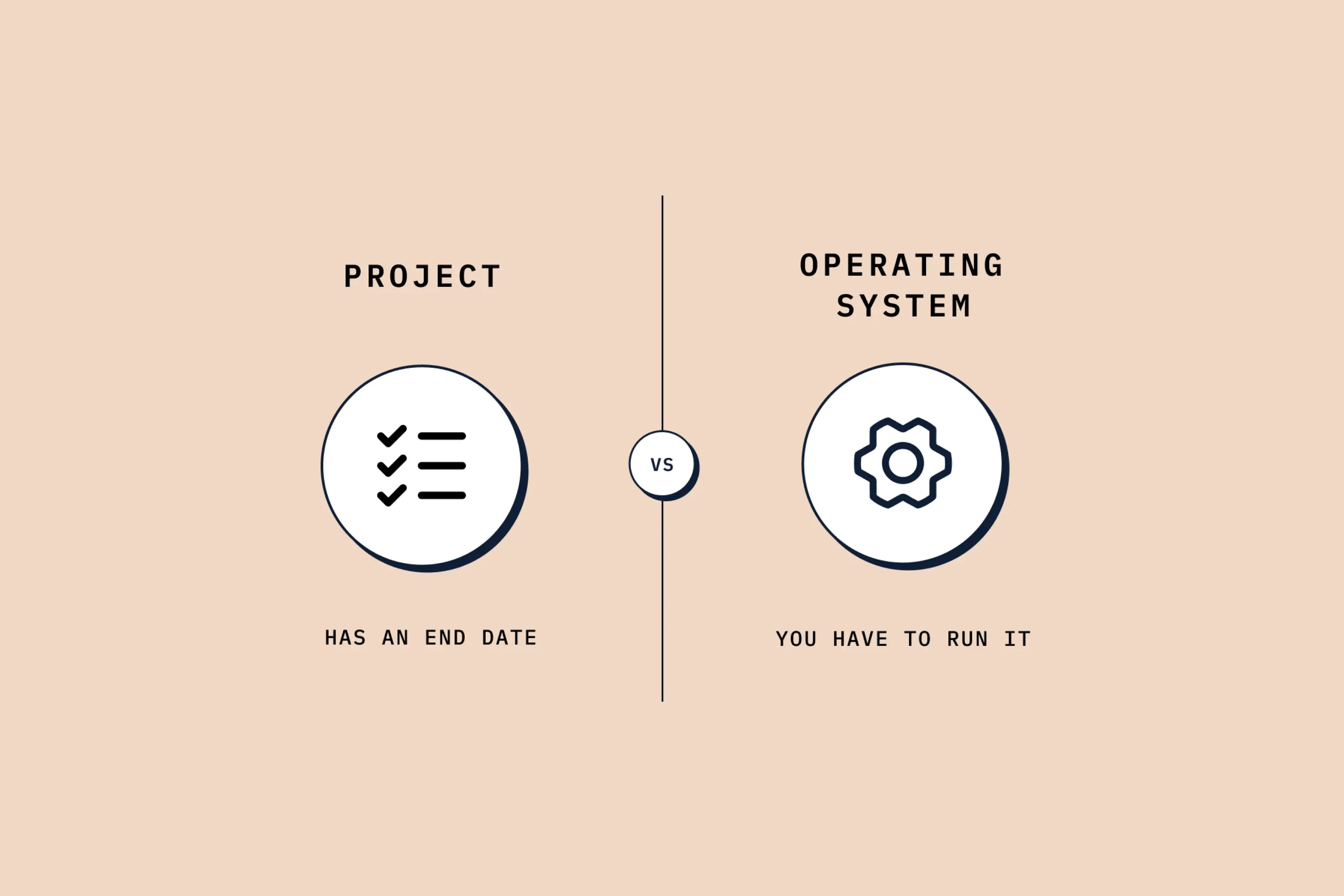
AI enablement looks like a training project. It isn't. Skill levels, tools and functions all move at once. Here's what running it internally really takes.

What is Claude Slides, and How to Use Them (Guide for Beginners)
How to use Claude Slides to build an on-brand deck from a one-line brief, edit and export it, and where it beats PowerPoint and Google Slides, and where it doesn't.
read next
Running AI Enablement Internally? Here are Three Things to Consider
AI enablement looks like a training project. It isn't. Skill levels, tools and functions all move at once. Here's what running it internally really takes.
What is Claude Slides, and How to Use Them (Guide for Beginners)
How to use Claude Slides to build an on-brand deck from a one-line brief, edit and export it, and where it beats PowerPoint and Google Slides, and where it doesn't.