How Agentic Workflows Change the Math for Revenue Teams

By
Alexandre Kantjas
・
・
5
Min
Read
How Agentic Workflows Change the Math for Revenue Teams
By
Alexandre Kantjas
5
Min
Read
Every revenue, growth, sales, and marketing leader we talk to is facing the same compounding problem. The workload keeps expanding, the team isn't growing at the same pace: more channels to cover, more customers to reach, more campaigns to ship, more pipelines to manage.
The pressure to do more with the same headcount has been building for years. The standard answer has been technology. Get more done by buying better tools. But that answer came with a hidden tax nobody warned operators about. The tools generated outputs, but operators still had to feed them. The tools sat in different platforms, so operators switched context all day. And the data those tools produced piled up unanalyzed, because nobody had time to crunch it.
There's a real way out now. Agentic workflows fix all three problems at once - if your team learns to use them.
The Three Pressures Squeezing Revenue Teams
Most of the pain in revenue and growth roles today comes down to three things:
The volume of outputs to generate
The context switching across platforms
The data analysis that rarely gets done
Each one alone is manageable. All three together, with a flat headcount, are crushing.
Pressure 1: The Output Treadmill
Revenue and marketing teams are content factories now. Outbound emails. Offer documents. Ads. Landing pages. Social posts. Newsletters. Sales sequences. Webinar invites. Customer onboarding flows. Win-back campaigns. Every channel the team picks up adds another stream of outputs to produce, week after week.
Tools helped a bit. Templates, CRM merge fields, basic copy assistants. None of them removed the core burden: a human still had to draft, edit, tailor, and ship each piece. As the channel count grew, so did the queue. Operators ended up spending most of their week in production mode, with little time left for thinking, testing, or improving.
Signs you are stuck here
Your team writes the same kinds of emails and posts every week
Production tasks fill the calendar instead of strategy work
"We need more content" is a recurring complaint in leadership meetings
Drafts sit in queues because the writer is also the strategist
Channels get deprioritized because nobody has time to feed them
Personalization gets dropped first when volume spikes
Campaign quality drops measurably late in the quarter
Pressure 2: The Context-Switching Tax
Modern revenue stacks have a tool for everything. A CRM for accounts. A different tool for sequences. Another for newsletters. A separate platform for ads. Yet another for analytics. A scheduler. A form builder. A community platform. Procurement approved them all because each one solved a real problem.
The hidden cost is everything in between.
Every workflow now spans three to seven platforms. The operator pulls a list from the CRM, exports it, formats it for the email tool, drops the campaign into the ad platform with a different audience definition, switches to the analytics tool to set up tracking, and pings someone on Slack to confirm. Half the day goes to moving information between systems that should already be talking to each other.
Signs you are stuck here
Your team has 10+ tabs open at any time
"Where is this data?" is a daily question
Manual exports and imports happen every week
Campaigns get blocked because someone forgot to update one system
Onboarding a new hire takes weeks because of the tool sprawl
Reporting requires pulling from three or four platforms
Operators describe their day as "stitching things together"
Pressure 3: The Analysis That Never Happens
Every campaign produces data. Open rates, reply rates, ad performance, pipeline movement, win rates by segment, channel attribution, retention cohorts. The data is there. What's missing is the time to sit with it, ask the right questions, and turn insight into the next move.
In theory, every Friday should end with a clean look at what worked, what didn't, and what to adjust. In practice, the operator is still finishing this week's campaigns on Friday afternoon. Analysis becomes a quarterly fire drill instead of a weekly habit. The team keeps running, but it's running on instinct, not signal.
Signs you are stuck here
Reports get built once a quarter, mostly for the board
Decisions about channels rely on gut, not numbers
Last quarter's poor-performing campaigns get repeated
Nobody can answer "which segment is converting best?" without a project
A/B tests get launched but never reviewed
The team plans next quarter without revisiting the last one
"We don't have time to look at the data" gets said out loud
Why Agentic Workflows Solve All Three
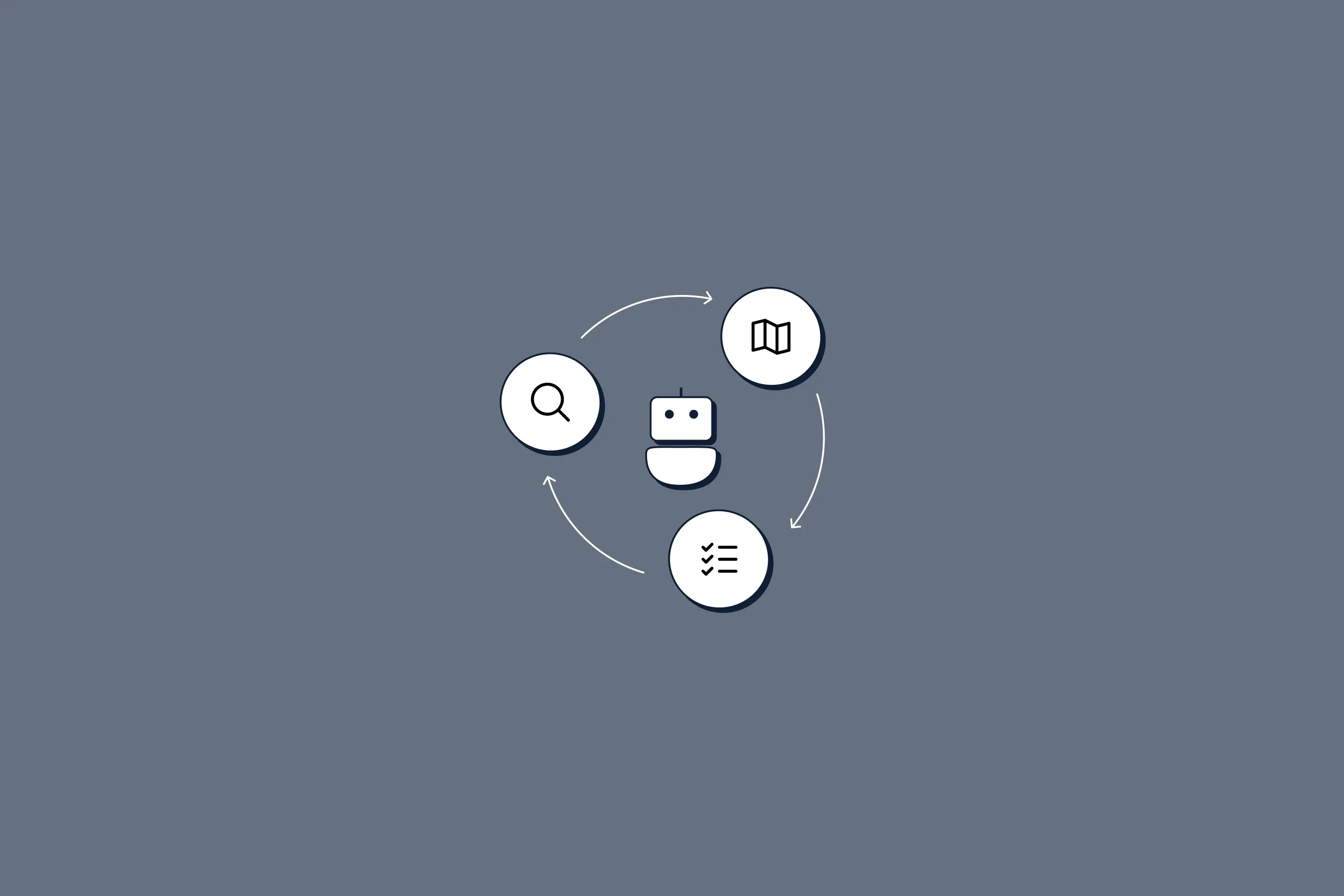
An agentic workflow is a system that does work on your behalf - drafting, coordinating, analyzing - using language as the interface and your tools as the substrate.
This is the first technology shift in twenty years that lines up with all three pressures at once.
It generates outputs on demand. Draft fifteen tailored outbound emails for a new segment. Produce a campaign brief and three variants for testing. Write the offer doc using the same structure as last quarter's. The output treadmill stops being your team's job. It becomes your team's instruction.
It coordinates across platforms. With the right connections, the workflow reads your CRM, pulls audience definitions, drafts in your sequencing tool, sets up the ad campaign, and writes the tracking spec. The context switching collapses from "the operator opens five tabs" to "the operator describes the goal." The tools stay - they just stop being the operator's problem.
It crunches the data. Ask it which channels converted best last month. Ask it which segments responded to the new offer. Ask it to compare this quarter's pipeline shape to last quarter's. The analysis that used to require a data team or a quarterly fire drill becomes a question you can ask on a Tuesday morning.
This is what changes the math. The same headcount can run more channels, with better personalization, while actually learning from what they ship.
Why Cowork Is the Platform Business Teams Will Adopt
Agentic workflows have existed in the engineering world for a while. Claude Code and similar developer platforms are powerful, but they were built for engineers. Most business operators won't pick them up. Corporate environments won't approve them as company-wide tools.
It's built for business professionals. The interface is approachable. The connections to common business tools are built in. The skills feel like assistants you actually want to work with, not command lines you have to learn. Companies are starting to make the bet on Cowork the way they made the bet on Slack ten years ago - because the platform meets their teams where they are.
The window for revenue, sales, and marketing teams to get ahead is now. The teams that build the agentic skill set this year will compound on it for years. The teams that wait will still be on the output treadmill while their competitors run more channels with the same headcount.
Where to Go From Here
The dilemma isn't going away. The workload will keep growing. The channels will keep multiplying. The pressure on revenue teams will not relax.
What can change is how your team handles it. Agentic workflows turn the three pressures - outputs, context switching, analysis - from constant drains into work your team can direct. The skill set is learnable. The platform is ready.
We run regular Claude Cowork for Growth programs to show you exactly how to do that.
It's a 3-week live cohort for Growth, Marketing, Sales, and RevOps operators — designed to take you from beginner to deploying your first automated workflows on your real stack. Our next cohort starts June 4.
Limited seats.
Every revenue, growth, sales, and marketing leader we talk to is facing the same compounding problem. The workload keeps expanding, the team isn't growing at the same pace: more channels to cover, more customers to reach, more campaigns to ship, more pipelines to manage.
The pressure to do more with the same headcount has been building for years. The standard answer has been technology. Get more done by buying better tools. But that answer came with a hidden tax nobody warned operators about. The tools generated outputs, but operators still had to feed them. The tools sat in different platforms, so operators switched context all day. And the data those tools produced piled up unanalyzed, because nobody had time to crunch it.
There's a real way out now. Agentic workflows fix all three problems at once - if your team learns to use them.
The Three Pressures Squeezing Revenue Teams
Most of the pain in revenue and growth roles today comes down to three things:
The volume of outputs to generate
The context switching across platforms
The data analysis that rarely gets done
Each one alone is manageable. All three together, with a flat headcount, are crushing.
Pressure 1: The Output Treadmill
Revenue and marketing teams are content factories now. Outbound emails. Offer documents. Ads. Landing pages. Social posts. Newsletters. Sales sequences. Webinar invites. Customer onboarding flows. Win-back campaigns. Every channel the team picks up adds another stream of outputs to produce, week after week.
Tools helped a bit. Templates, CRM merge fields, basic copy assistants. None of them removed the core burden: a human still had to draft, edit, tailor, and ship each piece. As the channel count grew, so did the queue. Operators ended up spending most of their week in production mode, with little time left for thinking, testing, or improving.
Signs you are stuck here
Your team writes the same kinds of emails and posts every week
Production tasks fill the calendar instead of strategy work
"We need more content" is a recurring complaint in leadership meetings
Drafts sit in queues because the writer is also the strategist
Channels get deprioritized because nobody has time to feed them
Personalization gets dropped first when volume spikes
Campaign quality drops measurably late in the quarter
Pressure 2: The Context-Switching Tax
Modern revenue stacks have a tool for everything. A CRM for accounts. A different tool for sequences. Another for newsletters. A separate platform for ads. Yet another for analytics. A scheduler. A form builder. A community platform. Procurement approved them all because each one solved a real problem.
The hidden cost is everything in between.
Every workflow now spans three to seven platforms. The operator pulls a list from the CRM, exports it, formats it for the email tool, drops the campaign into the ad platform with a different audience definition, switches to the analytics tool to set up tracking, and pings someone on Slack to confirm. Half the day goes to moving information between systems that should already be talking to each other.
Signs you are stuck here
Your team has 10+ tabs open at any time
"Where is this data?" is a daily question
Manual exports and imports happen every week
Campaigns get blocked because someone forgot to update one system
Onboarding a new hire takes weeks because of the tool sprawl
Reporting requires pulling from three or four platforms
Operators describe their day as "stitching things together"
Pressure 3: The Analysis That Never Happens
Every campaign produces data. Open rates, reply rates, ad performance, pipeline movement, win rates by segment, channel attribution, retention cohorts. The data is there. What's missing is the time to sit with it, ask the right questions, and turn insight into the next move.
In theory, every Friday should end with a clean look at what worked, what didn't, and what to adjust. In practice, the operator is still finishing this week's campaigns on Friday afternoon. Analysis becomes a quarterly fire drill instead of a weekly habit. The team keeps running, but it's running on instinct, not signal.
Signs you are stuck here
Reports get built once a quarter, mostly for the board
Decisions about channels rely on gut, not numbers
Last quarter's poor-performing campaigns get repeated
Nobody can answer "which segment is converting best?" without a project
A/B tests get launched but never reviewed
The team plans next quarter without revisiting the last one
"We don't have time to look at the data" gets said out loud
Why Agentic Workflows Solve All Three
An agentic workflow is a system that does work on your behalf - drafting, coordinating, analyzing - using language as the interface and your tools as the substrate.
This is the first technology shift in twenty years that lines up with all three pressures at once.
It generates outputs on demand. Draft fifteen tailored outbound emails for a new segment. Produce a campaign brief and three variants for testing. Write the offer doc using the same structure as last quarter's. The output treadmill stops being your team's job. It becomes your team's instruction.
It coordinates across platforms. With the right connections, the workflow reads your CRM, pulls audience definitions, drafts in your sequencing tool, sets up the ad campaign, and writes the tracking spec. The context switching collapses from "the operator opens five tabs" to "the operator describes the goal." The tools stay - they just stop being the operator's problem.
It crunches the data. Ask it which channels converted best last month. Ask it which segments responded to the new offer. Ask it to compare this quarter's pipeline shape to last quarter's. The analysis that used to require a data team or a quarterly fire drill becomes a question you can ask on a Tuesday morning.
This is what changes the math. The same headcount can run more channels, with better personalization, while actually learning from what they ship.
Why Cowork Is the Platform Business Teams Will Adopt
Agentic workflows have existed in the engineering world for a while. Claude Code and similar developer platforms are powerful, but they were built for engineers. Most business operators won't pick them up. Corporate environments won't approve them as company-wide tools.
It's built for business professionals. The interface is approachable. The connections to common business tools are built in. The skills feel like assistants you actually want to work with, not command lines you have to learn. Companies are starting to make the bet on Cowork the way they made the bet on Slack ten years ago - because the platform meets their teams where they are.
The window for revenue, sales, and marketing teams to get ahead is now. The teams that build the agentic skill set this year will compound on it for years. The teams that wait will still be on the output treadmill while their competitors run more channels with the same headcount.
Where to Go From Here
The dilemma isn't going away. The workload will keep growing. The channels will keep multiplying. The pressure on revenue teams will not relax.
What can change is how your team handles it. Agentic workflows turn the three pressures - outputs, context switching, analysis - from constant drains into work your team can direct. The skill set is learnable. The platform is ready.
We run regular Claude Cowork for Growth programs to show you exactly how to do that.
It's a 3-week live cohort for Growth, Marketing, Sales, and RevOps operators — designed to take you from beginner to deploying your first automated workflows on your real stack. Our next cohort starts June 4.
Limited seats.
read next
Running AI Enablement Internally? Here are Three Things to Consider
AI enablement looks like a training project. It isn't. Skill levels, tools and functions all move at once. Here's what running it internally really takes.

What is Claude Slides, and How to Use Them (Guide for Beginners)
How to use Claude Slides to build an on-brand deck from a one-line brief, edit and export it, and where it beats PowerPoint and Google Slides, and where it doesn't.
read next
Running AI Enablement Internally? Here are Three Things to Consider
AI enablement looks like a training project. It isn't. Skill levels, tools and functions all move at once. Here's what running it internally really takes.
What is Claude Slides, and How to Use Them (Guide for Beginners)
How to use Claude Slides to build an on-brand deck from a one-line brief, edit and export it, and where it beats PowerPoint and Google Slides, and where it doesn't.